


Incorrect personal information on your credit report can lead to serious reporting errors. These include wrong names, outdated addresses, incorrect Social Security number variations, or unknown contact details. Even though these fields are not directly used to calculate your credit score, they play a key role in identifying your credit file.
If this information is inaccurate, your credit report can get mixed with someone else’s data. This may result in accounts, inquiries, or negative entries that do not belong to you. In many cases, users searching for how to remove duplicate accounts from credit report files are actually dealing with issues caused by incorrect personal information.
Credit bureaus collect data from multiple sources, and mismatches can happen during data processing. Once incorrect information is added, it can continue to affect your profile until it is disputed and corrected.
This guide explains how to identify incorrect personal information, why it appears, and the exact steps required to remove or update it.
What Is Incorrect Personal Information on a Credit Report
Incorrect personal information refers to identity-related details on your credit report that do not accurately represent you. These fields are used by credit bureaus to match your identity with credit accounts. When they are wrong, they can lead to data mismatches or mixed credit files.
Common types of incorrect personal information include:
- Misspelled or incorrect names
- Old or unfamiliar addresses
- Wrong phone numbers
- Incorrect Social Security number variations
- Employment details that do not match your history
These errors usually occur due to data reporting inconsistencies. Lenders, collection agencies, and other data furnishers send information to credit bureaus. If the data is incomplete or slightly mismatched, the system may still attach it to your profile.
Another common cause is identity similarity. If someone has a name or identifying details similar to yours, their information may be incorrectly linked to your report. This is how mixed credit files are created.
It is important to note that personal information itself does not impact your credit score directly. However, it affects how your credit data is grouped. If incorrect details remain, they can lead to duplicate accounts, unknown inquiries, or accounts that do not belong to you.
Identifying these errors early is critical. In the next section, we will explain why incorrect personal information can lead to larger credit issues and why it should not be ignored.
Why Incorrect Personal Information Matters More Than You Think
Incorrect personal information does not directly affect your credit score, but it plays a critical role in how your credit data is organized and interpreted. When identity fields are wrong, the credit bureau may associate your profile with the wrong accounts or fail to separate your data from someone else’s.
The most serious issue is a mixed credit file. This happens when your report includes accounts, inquiries, or negative marks that belong to another individual with similar identifying details. Even a small mismatch, such as a similar name or shared address, can trigger this problem.
Incorrect personal information can also lead to:
- Accounts are being linked incorrectly to your profile
- Duplicate reporting of the same account under slightly different details
- Missed or delayed dispute resolutions due to an identity mismatch
- Lender confusion during manual review of your credit report
Lenders rely on identity data to verify ownership of accounts. If your information appears inconsistent, it can raise concerns about accuracy and reliability. In some cases, this may lead to application delays or additional verification requests.
Another issue is persistence. Once incorrect personal information is added, it can continue to reappear if the source of the error is not corrected. This means that even after removing a wrong account, it may return if the underlying identity mismatch remains.
Correcting personal information is often the first step before fixing larger credit issues.
Can You Fix or Remove Incorrect Personal Information Easily?
Yes. Credit bureaus are required to maintain accurate and verifiable information. If any personal detail on your credit report is incorrect, outdated, or does not belong to you, you have the right to request a correction or removal.
Under the Fair Credit Reporting Act, credit bureaus must investigate disputes related to identity information. If the information cannot be verified or is proven incorrect, it must be updated or removed.
Incorrect personal information can usually be fixed when:
- The name does not match your legal identity
- An address is outdated or never belonged to you
- A phone number is unfamiliar or incorrectly linked
- Employment details are wrong or irrelevant
- Identity fields are causing mixed or duplicate account reporting
The process is generally straightforward, but accuracy matters. You must clearly identify the incorrect detail and provide supporting proof, such as a government ID, utility bill, or official document.
It is important to understand that some information may appear multiple times across different bureaus. Each bureau maintains its own database, so corrections must be submitted separately.
In cases where incorrect personal information is linked to larger issues, such as duplicate or unknown accounts, fixing identity details often resolves multiple problems at once.
Step-by-Step: How to Dispute and Correct Personal Information Errors
Correcting personal information on your credit report requires a clear and documented approach. Follow these steps to ensure accurate and complete updates.
Step 1: Get your credit reports from all three bureaus
Download your reports from Experian, Equifax, and TransUnion through AnnualCreditReport.com. Review each report separately and note any incorrect personal details.
Once you have your credit reports, you can use dispute letter generator software like DisputeBee, which is a legitimate dispute letter generator software that helps you list your data, select incorrect entries, and then group them to create separate dispute letters for the respective bureau.
We will discuss more about how DisputeBee comes in handy in the later sections of this guide. If you wish to know more, you can also read our detailed DisputeBee Reviews and what users have to say about it.
Step 2: Identify and list all incorrect information
Mark every error clearly. Focus on names, addresses, phone numbers, and any identity fields that do not match your records. Make sure you separate outdated information from completely incorrect entries.
Step 3: Gather supporting documents
Prepare documents that prove your correct identity. This may include:
- Government-issued ID
- Utility bill or bank statement
- Social Security documentation, if required
Ensure all documents are current and match the correct information you want updated.
Step 4: Submit disputes to each credit bureau
File your dispute online or by mail with each bureau reporting the error.
Include:
- A clear explanation of what is incorrect
- Copies of your credit report with errors marked
- Supporting identity documents
Each bureau must investigate and respond within 30 days.
Step 5: Review responses and follow up if needed
After the investigation, check if the corrections were made. If any bureau does not update the information, resubmit the dispute with clearer documentation or additional proof.
Correcting personal information often resolves deeper reporting issues linked to your profile. In the next section, we will explain what to do if the credit bureau does not fix the issue after your dispute.
What to Do If the Credit Bureau Doesn’t Update Your Information
If a credit bureau does not correct your personal information after a dispute, you still have options. A rejection usually means the bureau believes the data is verified by the source, not that the information is correct.
Start by reviewing the response carefully. Check whether your dispute included all required documents and whether the explanation was clear. Missing or unclear documentation is one of the most common reasons for rejection.
If needed, submit a second dispute with stronger evidence. Include:
- Clear proof of identity, such as a government ID
- Updated address verification documents
- A direct explanation of why the current information is incorrect
Make sure your documents match exactly with the correction you are requesting.
You can also contact the data furnisher directly. This is the lender, collection agency, or company that reported the information. Ask them to correct your details at the source. Once they update their records, the change is usually reflected in your credit report.
If the issue continues, you can escalate the matter by filing a complaint with the Consumer Financial Protection Bureau. This creates a formal record and often leads to a more thorough review.
In some cases, adding a consumer statement to your report can provide context. This does not fix the issue, but can help explain discrepancies during manual reviews.
How Tools Like DisputeBee Can Help You Stay Organized
When correcting personal information errors, the process is usually simple but requires consistency. You may need to track multiple disputes, submit documents, and follow up with different credit bureaus. This is where a tool like DisputeBee can help.
DisputeBee does not fix errors automatically, but it provides a structured way to manage the process. Instead of handling everything manually, you can keep your disputes, documents, and timelines in one place.
Here’s how it supports the process:
- Generates dispute letters based on the issue you select
- Helps you organize identity documents and supporting proof
- Tracks when disputes are submitted and when responses are due
- Keeps a record of all communication for future follow-ups
This is especially useful if incorrect personal information has caused multiple issues, such as duplicate or unknown accounts. Fixing identity details may require more than one round of disputes, and staying organized becomes important.
Using a system like this reduces the chances of missing deadlines or submitting incomplete requests. It also helps you maintain a clear record if you need to escalate the issue later.
If you are someone who wants to start his/her/them own White Label credit repair software, I would definitely pair DisputeBee with Credit Repair Cloud (or replace DisputeBee with CloudMail) and make the business scale with the least effort and cost.
Final Thoughts: Why Accurate Personal Information Is Critical for Your Credit
Incorrect personal information may seem minor, but it can lead to larger credit reporting issues if left unresolved. It affects how your credit file is matched, which can result in duplicate accounts, mixed profiles, or entries that do not belong to you.
The correction process is straightforward when handled properly. Identify the error, provide accurate documentation, and follow through with each credit bureau. Most issues are resolved once the correct identity information is verified.
It is also important to monitor your credit reports regularly. Even after a correction, errors can reappear if the source data is not updated. Ongoing review helps ensure your credit file remains accurate over time.
Fixing personal information is not just about correcting details. It improves the overall reliability of your credit report and reduces the risk of future errors.
Frequently Asked Questions
No. Personal details do not directly impact your score, but they can lead to incorrect accounts being linked to your profile, which can affect your score.
Yes. You can request the removal of outdated or incorrect addresses, especially if they are linked to accounts that do not belong to you.
Yes. Each bureau maintains its own records. Correcting information with one does not update the others.
Typically, a government-issued ID and proof of address, such as a utility bill or bank statement.
Yes. Identity mismatches can lead to the same account being reported more than once or being linked incorrectly.

The Credit Saint
Ranked #1 in tackling inaccurate credit entries, Credit Saint is appreciated by almost every other consumer company. It has better plans and a simple process. The best part? You get a 90-day money-back guarantee.
There are pricing models designed as per the need of consumers and well suit their interests. This credit repair company also back #1 position in BBB credit rating and consumer affairs.
| In Business Since | Overall Rating | Reputation Score |
|---|---|---|
| 2004 | 4.7/5 | 9/10 |

The Credit People
Credit People has helped thousands of people fix their credit reports. By far, it is one of the cheapest and least expensive services, with better results and dedicated professionals.
The perks of using The Credit People include free credit scores and credit reports when you opt for their services. These affordable credit restoration services can boost your credit score with an average of 53-187 credit points.
| In Business Since | Overall Score | Reputation |
|---|---|---|
| 1999 | 4.5/5 | 9.0/10 |
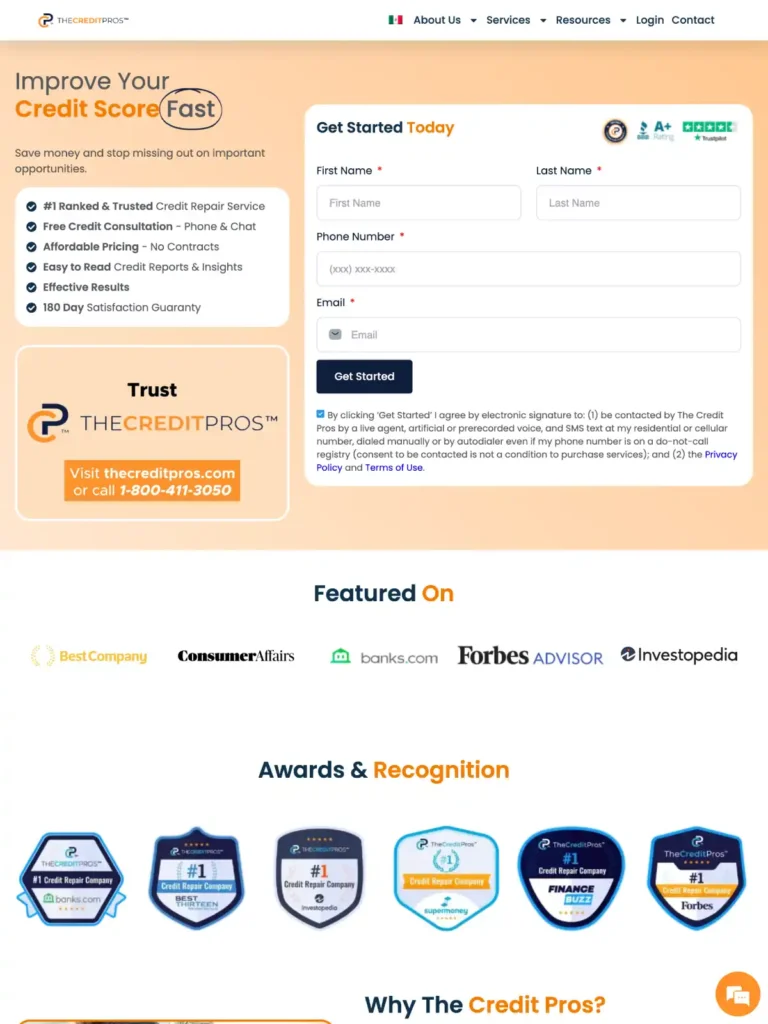
The Credit Pros
TheCreditPros.com offers a comprehensive range of credit repair services designed to help improve your credit score quickly and efficiently. They provide personalized dispute letters, credit monitoring, and identity theft protection.
With a team of experienced professionals, TheCreditPros.com ensures compliance with legal standards, and its user-friendly platform makes it easy to track your progress. Their customer-centric approach and transparent pricing have earned them high ratings and positive reviews from satisfied clients.
| In Business Since | Overall Score | Reputation Score |
|---|---|---|
| 2009 | 4.7 | 8/10 |

Credit Firm
Serving in key financial areas ever since 1997, The Credit Firm has proven to be one of the best. With the support of professional attorneys, credit repair experts, financial guides, and dozens of other core members on the team, it has proven to be actionable in and around 50 states of America.
“Credit Firm” has a straightforward process for fixing credit scores, making them one of the best. This service is best for those who are looking for better jobs and faster credit and loan approvals.
| In Business Since | Overall Rating | Reputation Score |
|---|---|---|
| 2010 | 4.0 | 7/10 |


